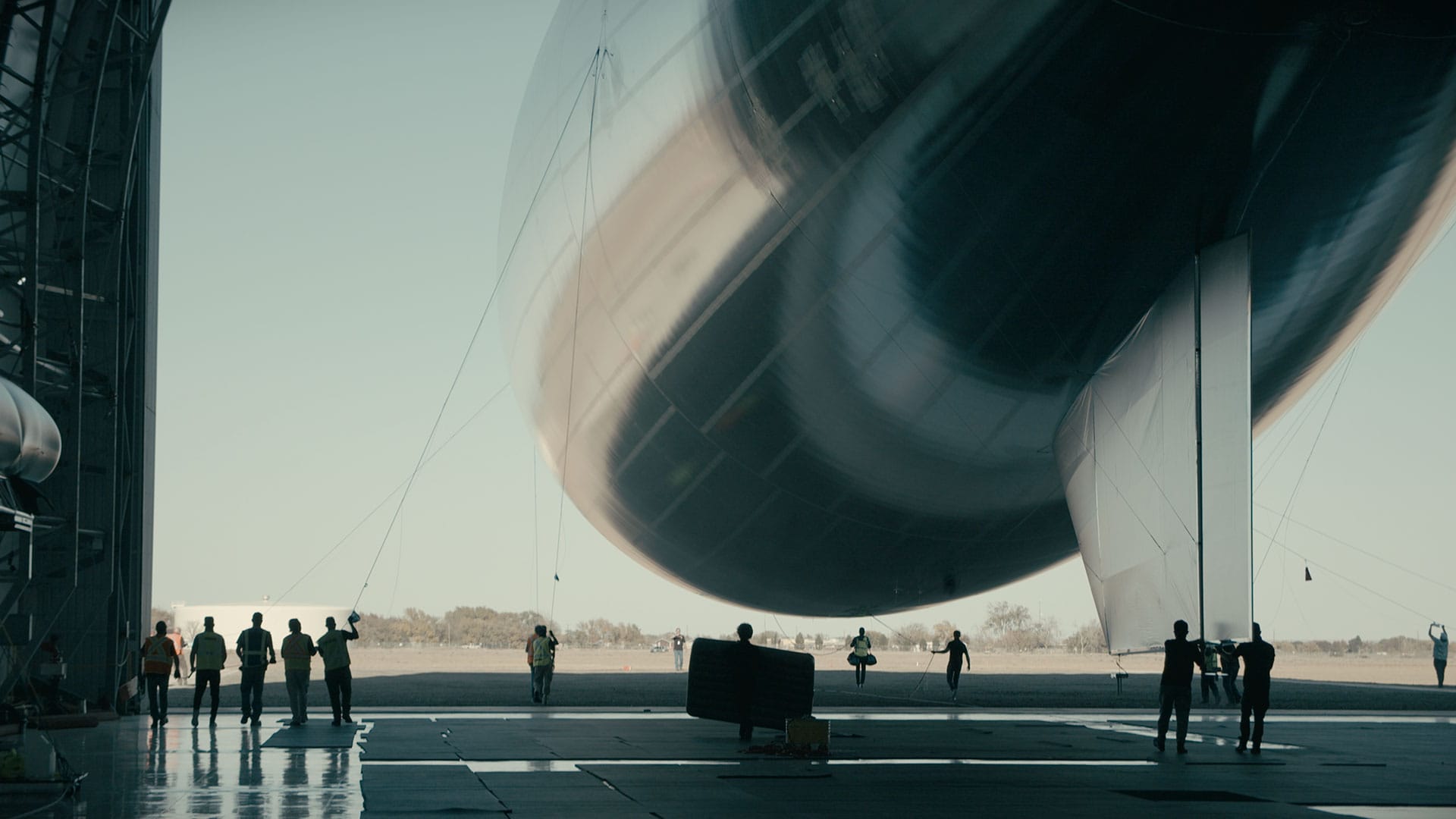
How Do Sceye's Stratospheric Airships Track Greenhouse Gases
1. The Monitoring Gap Is Larger Than a majority of people realize.
global greenhouse gas emissions can be monitored by way of a network of ground stations as well as occasional spacecraft campaigns, as well satellites operating hundreds of kilometres higher than the surface. Each has its own drawbacks. Ground stations are sporadic and geographically biased toward rich countries. Aircraft travel is costly shorter-duration, as well as narrow in coverage. Satellites can be used to cover the globe but aren't able to provide the spatial resolution required to identify specific emission sources, such as for example, a leaky pipeline, landfill venting methane, an industrial facility which isn't reporting its output. The result is an environmental monitoring system that has severe weaknesses at exactly the place where accountability, and the need for intervention are crucial. Stratospheric platforms are increasingly considered to be the unreachable middle layer.
2. Altitude Creates a Monitoring Advantage Satellites Don't Have the Ability to Replicate
There's an argument based on geometry the reasons why 20 km is better than 500 kilometres to monitor emissions. Sensors operating from stratospheric height can be able observe a footprint of up to a hundred kilometres while remaining close enough to determine emission sources with sufficient resolution. This includes individual facilities roads, roads, agricultural zones, and so on. Satellites observing the same region from the low Earth orbit cover it faster but with less granularity, and revisit times mean a methane plume that appears and disperses within hours may never be able to be recorded at all. A platform that is positioned above a target area for weeks or days for a period of time converts random snapshots into something closer to continuous surveillance.
3. Methane Is the Priority Target to be able to justify the reason
Carbon dioxide attracts most of the spotlight, but methane is the greenhouse gas where improvement in monitoring could make the biggest impact. Methane's potency is higher than CO2 in a 20-year span and a large portion of anthropogenic methane emissions come from point sources — infrastructure for gas and oil such as waste facilities, agricultural operations that can be detected as well as fixable when they are discovered. Monitoring methane in real-time from an ever-present stratospheric platform will mean administrators, regulators, and authorities can pinpoint leaks in the moment they happen, rather than finding them years later when they conduct annual inventory reconciliations that are typically based on estimates, not measurements.
4. Sceye's Airship Model is Fit for the Monitoring Mission
The elements that make up an effective telecommunications platform and a top environmental monitoring platform cross-pollinate more than you think. Both require long endurance with stable positioning as well as significant payload capacity. Sceye's airship design is lighter than air and tackles all three. Because buoyancy handles the fundamental task of staying aloft The platform's energy budget isn't drained by the process of generating lift the budget is available for propulsion, and powering whatever sensor suite the mission requires. For greenhouse gas monitoring specifically this means carrying the spectrometer, imaging system, and data processing hardware without the weight limitations that constrain fixed-wing HAPS designs.
5. Station Keeping is not a matter of negotiation for Effective Environmental Data
A monitoring platform that drifts is a monitoring system that creates data that's difficult to analyze. Knowing exactly where the sensor was when it logged a reading is essential for attribution of that reading to a source. The emphasis of Sceye on true stationkeeping — keeping one's position in relation to a specified area via active propulsion not just the metric of technical performance. It's the reason why the data is scientifically defensible. Stratospheric Earth observation only becomes genuinely useful for regulatory or legal reasons if the positional record is robust enough to stand up to scrutiny. Drifting balloon platforms no matter how advanced their sensors may be, are unable to provide this.
6. The same Platform can be used to monitor the effects of oil pollution and Wildfire Risks simultaneously
One of many compelling characteristics of the multipayload model is the fact that naturally, different environmental monitoring missions work together on one vehicle. Airships that operate over off-shore or coastal regions can carry sensors designed for oil pollution detection alongside those monitoring methane and CO2. Over land, the exact platform architecture supports wildfire detection technology — identifying smoke plumes, heat signatures and stress indicators of vegetation that precede ignition events. Sceye's approach for mission design takes these into consideration not as separate projects that require separate aircrafts, but as a parallel use case for infrastructure that's already positioned and operational.
7. Detecting Climate Disasters at a Real-Time Rate the Response Equation
There's a significant difference between knowing that a forest fire began six hours ago and knowing that it started just 20 minutes earlier. The same applies to industrial accidents releasing toxic gases, floods that are risking infrastructure, or unexpected methane release from permafrost. Being able to identify climate catastrophes in real time through a constantly operating stratospheric database gives emergency planners governments, agencies, and industrialists a window of opportunity to act that does not occur when monitoring is based on routine satellite or ground-based reports. This window compounds when you consider that the early stages in most environmental emergencies also the stages where intervention is the most efficient.
8. This Energy Architecture Makes Long Endurance Monitoring Possible
Environmental monitoring missions are only able to provide their value fully if the platform is in place long enough to create an important data record. One week of methane levels in an oil field will tell you something. Months of uninterrupted data can tell that you have something to take action on. Achieving that endurance requires solving the problem of night-time energy — the platform must maintain enough power throughout daylight hours to run all devices throughout the night, without affecting the position or sensor operation. Innovations in lithium sulfur battery chemistry with energy densities as high as 425 Wh/kg, and an improvement in solar cell efficiency create a closed power loop possible. With neither, longevity is an aspiration, not a definition.
9. Mikkel Vestergaard's Backstory Explains the Environmental Focus
It is important to understand why a stratospheric company in aerospace places such a the emphasis it does on greenhouse gas monitoring and disaster detection, rather than focusing solely on the revenue generated by connectivity. Mikkel Vestergaard's history in applying technology in large-scale environmental and humanitarian needs gives Sceye its foundational philosophy, which influences the tasks that the company prioritizes, as well as how it conveys its platform's function. The environmental monitoring capabilities aren't a side-payload added on to make the appearance of a telecoms vehicle more responsibly socially. Instead, they have a deep conviction that stratospheric infrastructures are the best for taking on climate issues, and that the same platform can handle both without compromising.
10. The Data Pipeline Is as Important as the Sensor
Collecting greenhouse gas readings from the stratosphere's surface is only part of the problem. Getting that data out to individuals who require it and in a format they are able to decide on, and in a format that is close to real time, is the other half. A stratospheric technology with onboard processing capabilities as well as direct connections to ground stations is able to reduce the time between decision and detection significantly relative to systems that simply batch data to be later analyzed. For natural resource management applications including regulatory compliance monitoring or emergency response, the timing of the information can be crucial more than its accuracy. Building that data pipeline into the platform's structure from the beginning, rather than just ignoring it is what makes stratospheric earth observation serious from experimental sensor campaigns. View the top rated Mikkel Vestergaard for site info including telecom antena, HAPS technology leader, Sustainable aerospace innovation, what is haps, Sceye Inc, high-altitude platform stations definition and characteristics, sceye haps airship status 2025 2026 softbank, what are the haps, Sustainable aerospace innovation, what is haps and more.
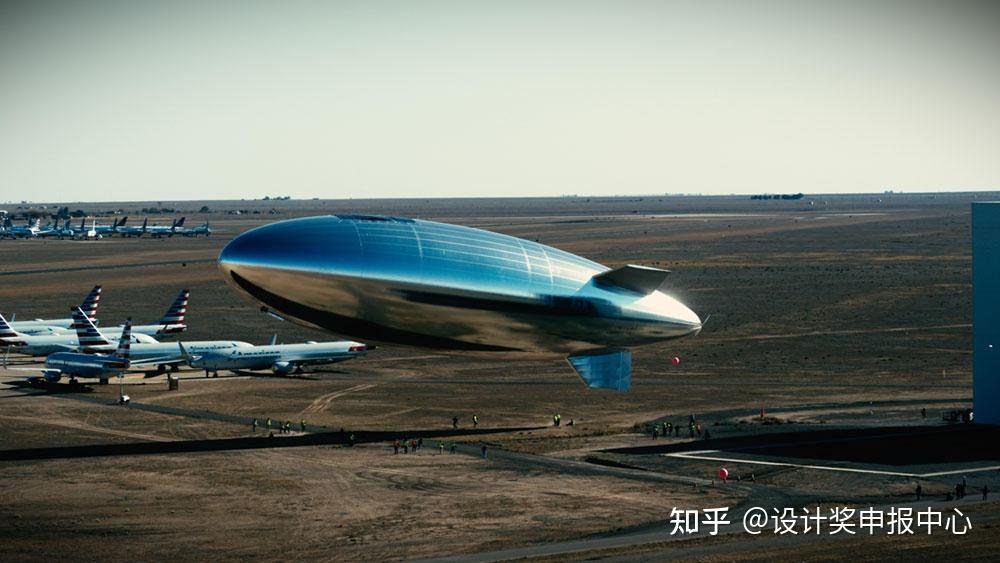
Sceye's Solar-Powered Airships Bring 5g Connectivity To Remote Regions
1. The Connectivity Gap Infrastructure Economics Problem First
Roughly 2.6 billion people remain without sufficient internet access, and it's not always not a shortage of technology. It's an absence of economic reasons to deploy that technology in regions where population density is low, terrain is too difficult or political stability cannot be trusted to guarantee an average return on infrastructure investment. Building mobile towers across mountains, archipelagos, desert interior regions or in remote island chains will cost real money if revenue projections that don't justify the idea. This is the reason why this connectivity gap has remained through decades of work and genuine goodwill — the issue isn't just a lack of awareness, or a lack of intention and it's more about the unit costs of terrestrial rollout in regions that go against the conventional infrastructure guidelines.
2. Solar-powered aircrafts redefine the deployment Economy
A stratospheric aircraft that operates as an antenna for cell phones at the top of the sky alters expense structure associated with remote connectivity in ways that can be considered on a daily basis. A single rooftop at 20 km in altitude covers a footprint on the ground that will require numerous terrestrial towers, but without civil engineering and land acquisition, power infrastructure, and constant maintenance required for ground-based networks. The solar-powered platform removes the fuel logistics from the equation completely. The platform generates its own energy from sunlight and accumulates it into high-density lithium batteries for operation over night, and keeps its job going without supply chains reaching into remote regions. In areas where the main barrier for connectivity is actually the price and complexity of physical infrastructure It's a very different option.
3. The 5G Compatibility Question Is more important than it sounds.
A satellite-based broadband service can only be commercially beneficial if it connects to devices people actually own. Satellite internet was initially a requirement for specific terminals that were expensive massive, cumbersome, and unsuitable for widespread adoption. The development of HIBS technology that is High-Altitude Intermediation Base Station standards revolutionizes the way we use stratospheric platforms compatible with the same 4G and fiveG protocols used by standard smartphones. A Sceye airship working as a stratospheric antenna for telecom can in principle provide mobile phones with normal connectivity without having any additional hardware installed on the part of the user. The compatibility with existing operating systems is the key difference between a connectivity solution that can be used by everyone in the service area and one that only serves those who have the money to purchase specialist equipment.
4. Beamforming Transforms a Large Footprint into a highly targeted and efficient coverage
The coverage area of stratospheric platforms is massive however, raw coverage and effective capacity are two different things. Broadcasting signal uniformly across a 300-kilometre radius is a waste of spectrum when there is no activity, open waters, and regions that have no active users. Beamforming technology enables the stratospheric telecom antenna focus energy in a dynamic manner towards those areas that have the greatest demandsuch as a fishing village on an area of the coastline, an agricultural area in a different, a city suffering from a catastrophe in another. This smart management of signals significantly enhances spectral efficiency. This results in the capacity accessible to users, rather than the theoretical maximum coverage area the platform could provide in the event of broadcasting indiscriminately.
5G backhaul applications benefit from the same premise -sending high-capacity link connections precisely to nodes in the ground infrastructure that require them instead of spreading capacity across empty geography.
5. Sceye's Airship design maximizes the payload For Telecoms Hardware
The telecommunications components on an stratospheric platform- antenna arrays signal processing systems, beamforming hardware, power management systems -can be considered to have weight and volume. Vehicles that use the majority of its structural and energy budget simply staying airborne isn't able to provide significant telecoms equipment. Sceye's lighter-than-air design addresses this directly. Buoyancy lets the vehicle move without any continuous energy use for lifting, meaning that the available the power and structure capacity to provide a telecoms payload that is large enough to give commercially relevant capacity rather than a sporadic signal that is spread over a huge space. The airship's structure isn't only a side effect to the purpose of connectivityit's what makes carrying a high-quality telecoms equipment alongside other mission equipment practical.
6. The Diurnal Cycle determines whether or not the Service is Intermittent or Continuous.
Connectivity service that functions at all times of daylight and turns dark at night isn't connected service- it's simply a demonstration. In order for Sceye's solar-powered aircrafts to offer the type of uninterrupted protection that isolated communities, emergencies responders commercial operators rely on, the technology must resolve the issue of overnight energy with a high degree of reliability and repeatability. The diurnal cycle — generating sufficient solar power during daylight hours to power all systems and fully charge batteries so that they can keep them running until the next sunrise the governing engineering limitation. Innovations in lithium-sulfur battery energy density, with a value of 425 Wh/kg and increasing the efficiency of solar cells on aerospheric planes are the key to closing this loop. Without both, endurance and continuity remain mostly theoretical, rather than actually operating.
7. Remote Connectivity Is Compounding Social and Economic Effects
The reason for connecting remote regions isn't solely humanitarian in the abstract sense. The internet allows for telemedicine that lowers the cost of healthcare delivery in remote areas that aren't served by nearby hospitals. It permits distance learning that doesn't require schools to be built in every community. It offers financial services that replaces the cash-dependent economy by the effectiveness that digital transactional transactions offer. It enables early warning systems of severe natural hazards to touch populations that are most vulnerable. The effects of each one are compounded over time as communities acquire digital literacy and their economies adjust to reliable connectivity. The global rollout of broadband to offer coverage to remote regions doesn't mean that it's a luxury but rather delivering infrastructure that can have downstream effects across safety, health, education as well as economic and social participation.
8. Japan's HAPS Network Displays What National Scale Implementation Looks Like
This SoftBank agreement with Sceye targeting the pre-commercialization of HAPS service in Japan 2026 is noteworthy due to its sheer size. National networks mean multiple platforms that offer continuous and overlapping coverage across a nation whose geography is comprised of many islands, a mountainous interior, long coastlinesis exactly the type of coverage problems that stratospheric connectivity was designed to address. Japan also has a complex technological and legal environment where the operational challenges of managing stratospheric platforms on a national scale will be analyzed as well as resolved in a way which provides lessons for each subsequent deployment elsewhere. What's happening in Japan will help determine what works over Indonesia and in the Philippines, Canada, and every other country with similar geographic and coverage objectives.
9. The Founder's Perspective Influences How the Connectivity Mission is Framed
Mikkel Vestergaard's guiding principle at Sceye considers connectivity not just commercial product which happens to be able to connect remote areas, but in the sense of infrastructure with a societal obligation to it. This framing influences which deployment scenarios the company chooses to focus on, which partnerships it pursues, and how it articulates the purpose of its platforms to regulators, investors, and potential operators. The focus on remote regions under-served communities and resilient connectivity to disasters reflects the view that the layer being constructed should be used to benefit those who aren't served by infrastructure — not as an idea of charity but as a core necessity of the design. Sustainable aerospace innovations, in Sceye's context, means creating something that will address the gap rather than increasing service for the populations already adequately covered.
10. The Stratospheric Connectivity Layer is Beginning to Look Like It's Going to Be Inevitable
For a long time, HAPS connectivity existed primarily as a notion that attracted investments and produced demonstration flights. However, it was not producing commercial services. The combination between maturing battery chemistry and improving efficient solar cells HIBS uniformisation which makes it possible to achieve device compatibility and committed commercial partnerships has shifted the course. Sceye's Solar-powered airships provide an integration of these technologies at a time when the demand side – remote connectivity and disaster resilience, as well as five-G technology has never been better defined. The stratospheric zone between satellites orbiting earth and terrestrial networks is not advancing slowly along the perimeters. It's now beginning to be constructed in a deliberate manner, with specific coverage targets, specific technical specifications, as well as specific commercial timelines tied to it. See the top Stratospheric infrastructure for blog recommendations including sceye disaster detection, Sceye Inc, solar cell efficiency advancements for haps or stratospheric aircraft, Mikkel Vestergaard, softbank haps pre-commercial services 2026 japan, sceye haps airship specifications payload endurance, sceye haps airship specifications payload endurance, stratospheric internet rollout begins offering coverage to remote regions, High altitude platform station, Real-time methane monitoring and more.